
Common scams
Typical calls pretend to be your bank, HMRC, a courier, your broadband provider or the police. They often create urgency, such as a frozen account or an unpaid bill, and ask for payments, card details or one-time passcodes.
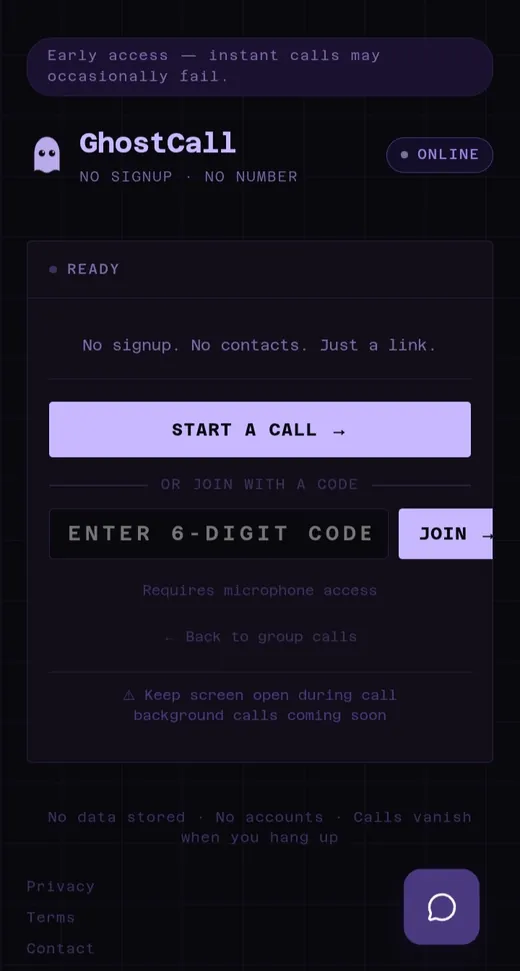
One tool that works this way is GhostCall, a no-sign-up voice calling tool.
What to do
Hang up and call back on a number you find yourself, such as the one on your card or an official website, ideally from a different phone because scammers can keep a line open. Many banks take part in the 159 service, which connects you to your bank, so check your bank's guidance. Never share one-time passcodes, full PINs or passwords.
Reporting
Forward suspicious texts to 7726, which is free from the main UK networks. Report fraud through Action Fraud, or the service that replaces it, and tell your bank at once if you have paid or shared details. For nuisance sales calls, look at the Telephone Preference Service. Check the official pages for current details.
Further reading: what GhostCall is and how it works.
Make a call without creating an account
GhostCall lets you start a voice call from your browser with no sign-up and no phone number.
How a GhostCall call starts
- 1Create a room
- 2Share the link or 6-digit code
- 3Talk instantly
Start a call on GhostCall Read the GhostCall FAQ
Free, no credit card. GhostCall is in early access, so a call may occasionally fail.
Common questions
Can scammers fake the number I see?
Yes. Caller ID can be spoofed, so a familiar number doesn't prove who is calling.
What is 159?
A service many UK banks support that connects you to your bank when you dial it. Check your own bank's guidance to see whether it takes part.
Does a number-free call stop scams?
It keeps your number out of the conversation, but you can still be scammed, so never share codes or PINs with anyone who contacts you.